
Project for the Georgian Pavilion
Project for the Georgian Pavilion
Project for the Georgian Pavilion
At the XIV Venice International Architecture Biennale
Curator: Khatuna Khabuliani
Concept
“Kamikaze Loggia” is a crucial condition for the new project to be presented at the architecture biennale. While it may seem problematic from one perspective, it symbolically represents an essential characteristic of the Georgian context that plays a role in the attempt to present a complete picture. This characteristic encompasses the remnants left by the irrational processes following the crisis period of the 1990s, manifesting as “creatively” uncontrolled and spontaneous constructions. In the early years of post-Soviet Georgia, when the discourse of defining statehood and cultural identity was still in its infancy, the multiplied versions of “Kamikaze Loggia” truly represented a distinctive feature of that time, alongside the concept of “Euro-repair,” which denoted a superficial and somewhat provincial version of hasty integration with the West. In subsequent years, as the discourse of distancing from the Soviet past and defining identity became relatively intense despite numerous obstacles, illegal constructions, the state of cultural monuments, superficial changes carried out in the name of pseudo-restoration, irreversible losses in historical parts of cities, and hasty decisions made to achieve rapid modernization effects became subjects of scrutiny. The last decade has brought changes where the theme of added loggias has receded into the background, and interesting architectural innovations have emerged in Tbilisi and other Georgian cities, including those by Georgian architects. At the 55th Venice Biennale of Contemporary Art, “Kamikaze Loggia” was indeed a successful project; however, some representatives of Georgian culture felt a sense of inadequacy because, to date, transforming “Kamikaze Loggia” into a symbol of Georgian identity contributes to a certain exoticism of the country in international spaces and does not showcase the interesting aspects of the artistic processes ongoing in the Georgian context. There is a kind of request for Georgia to present itself at the international exhibition as a country with its own authentic context, a valuable architectural history, and the will to integrate with contemporary processes as a full-fledged participant. The presented project aims to demonstrate a metaphorical vision of the country’s transformation through the synthesis of architectural and artistic understanding, considering the foundations relevant to the field of architecture in general and specifically to the Georgian specificity. The transitional period currently taking place in Georgia certainly reflects global processes, and in this interaction, interesting paths of defining cultural identity emerge in a small post-Soviet country that does not belong to those states that define world politics.
2. “Georgia in Transformation” – Project by Architectural Bureau AB5. (Members of AB5: David Khabuliani, Lasha Losaberidze, Sofio Gasviani)
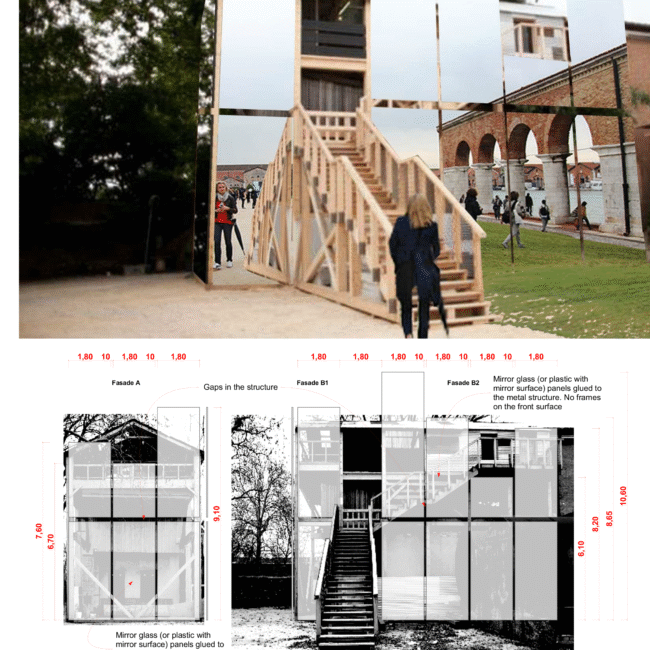
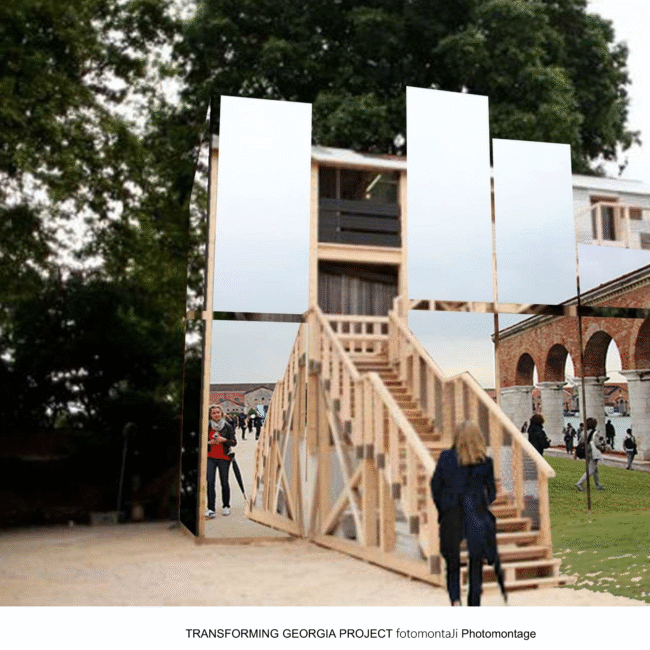
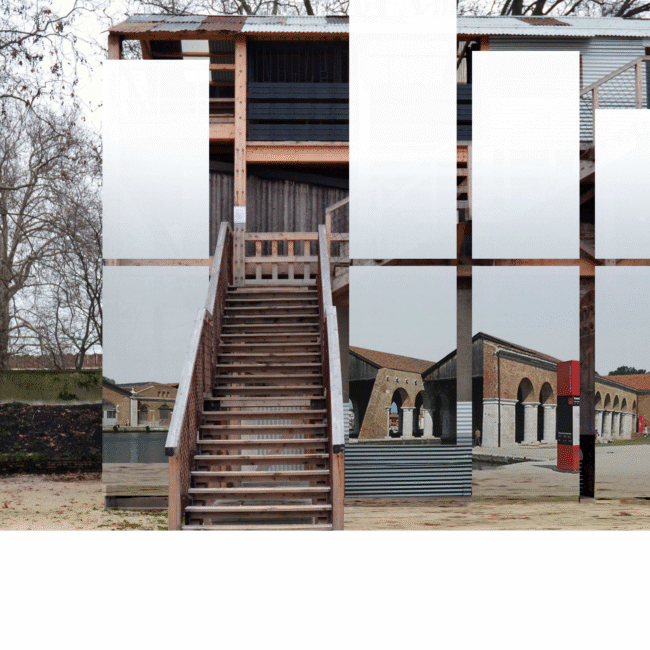
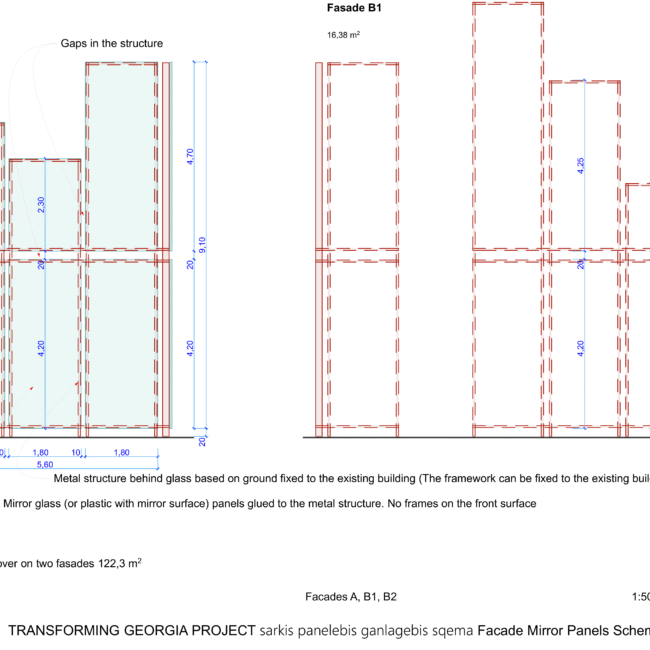
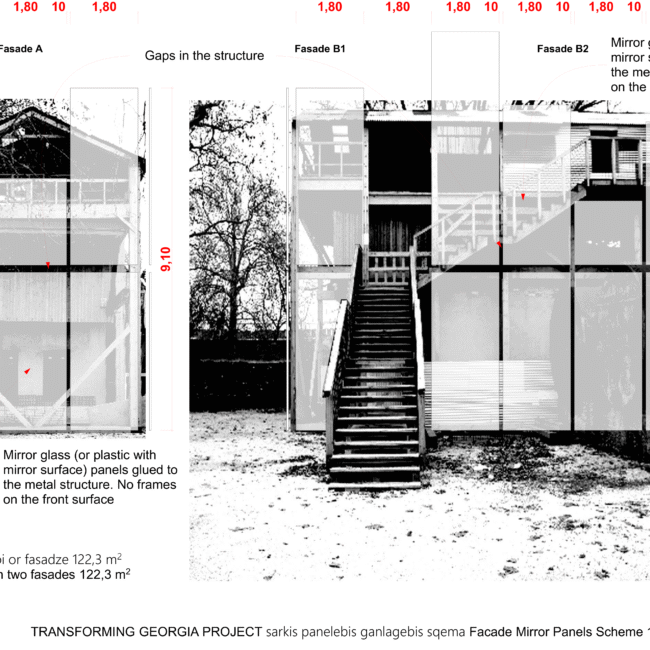
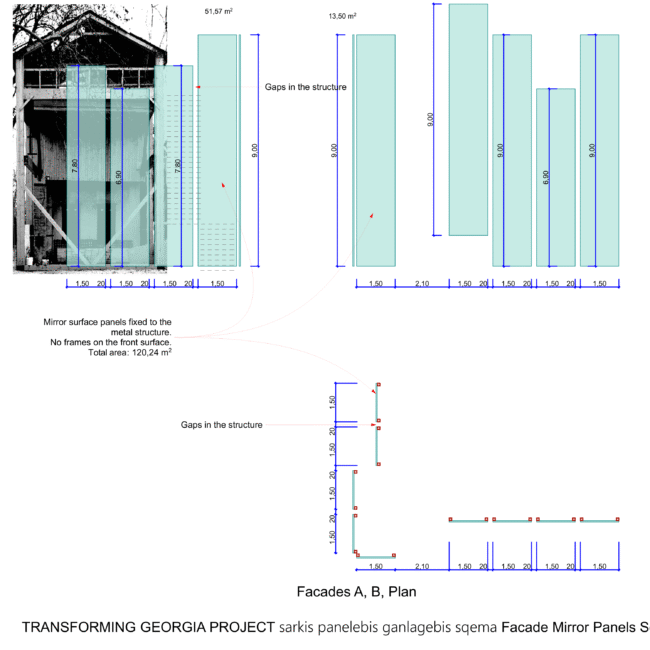
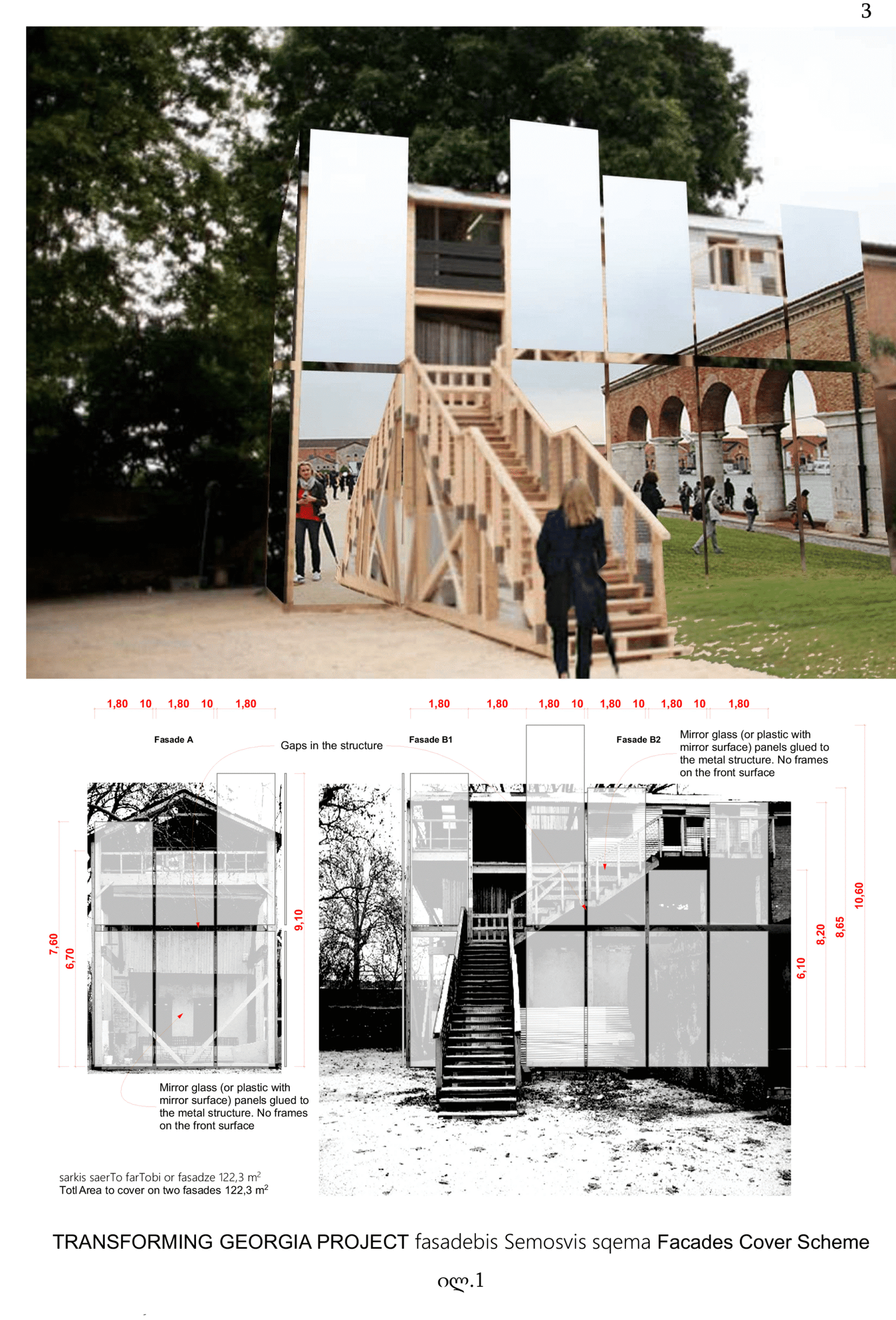
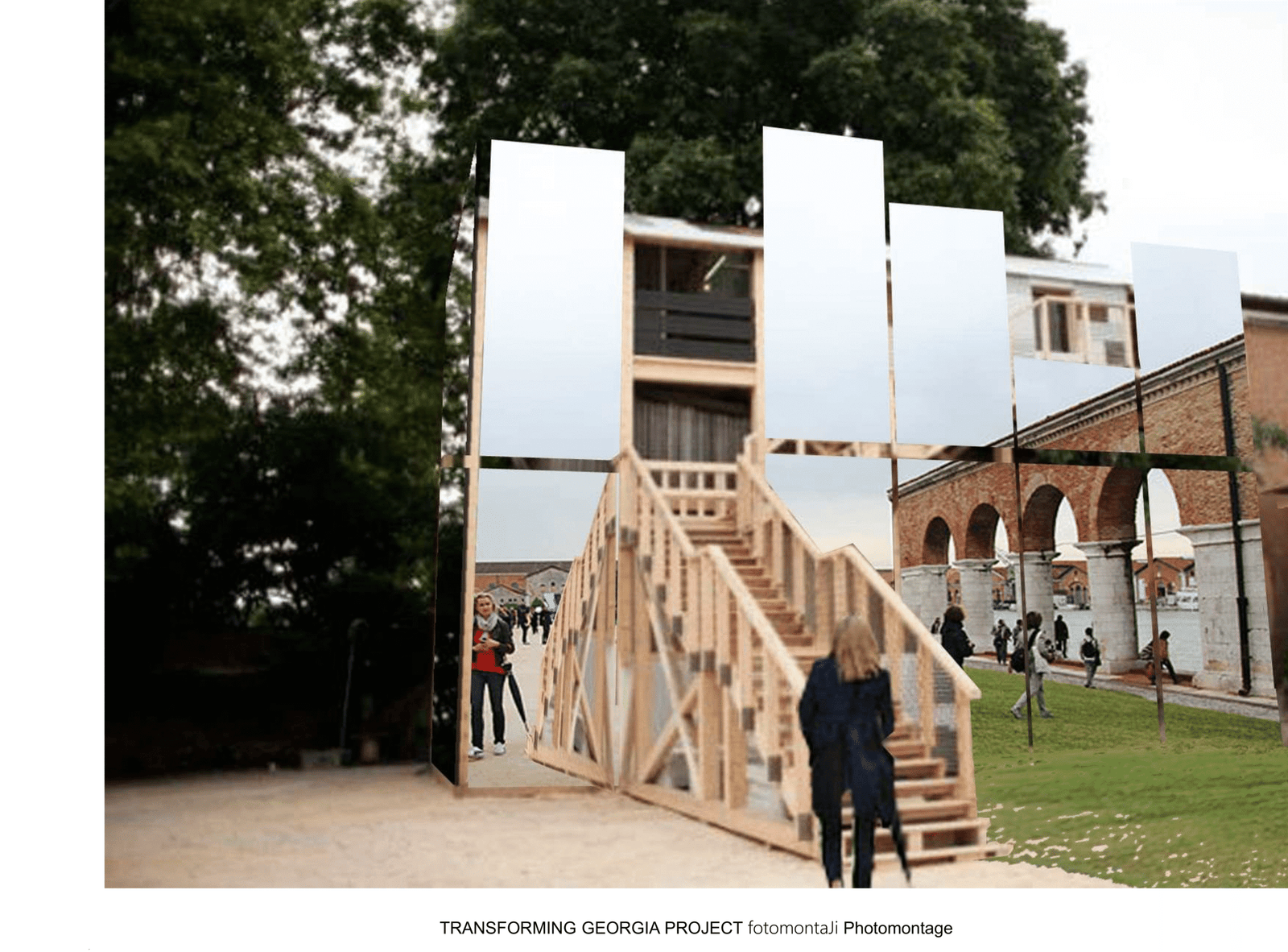
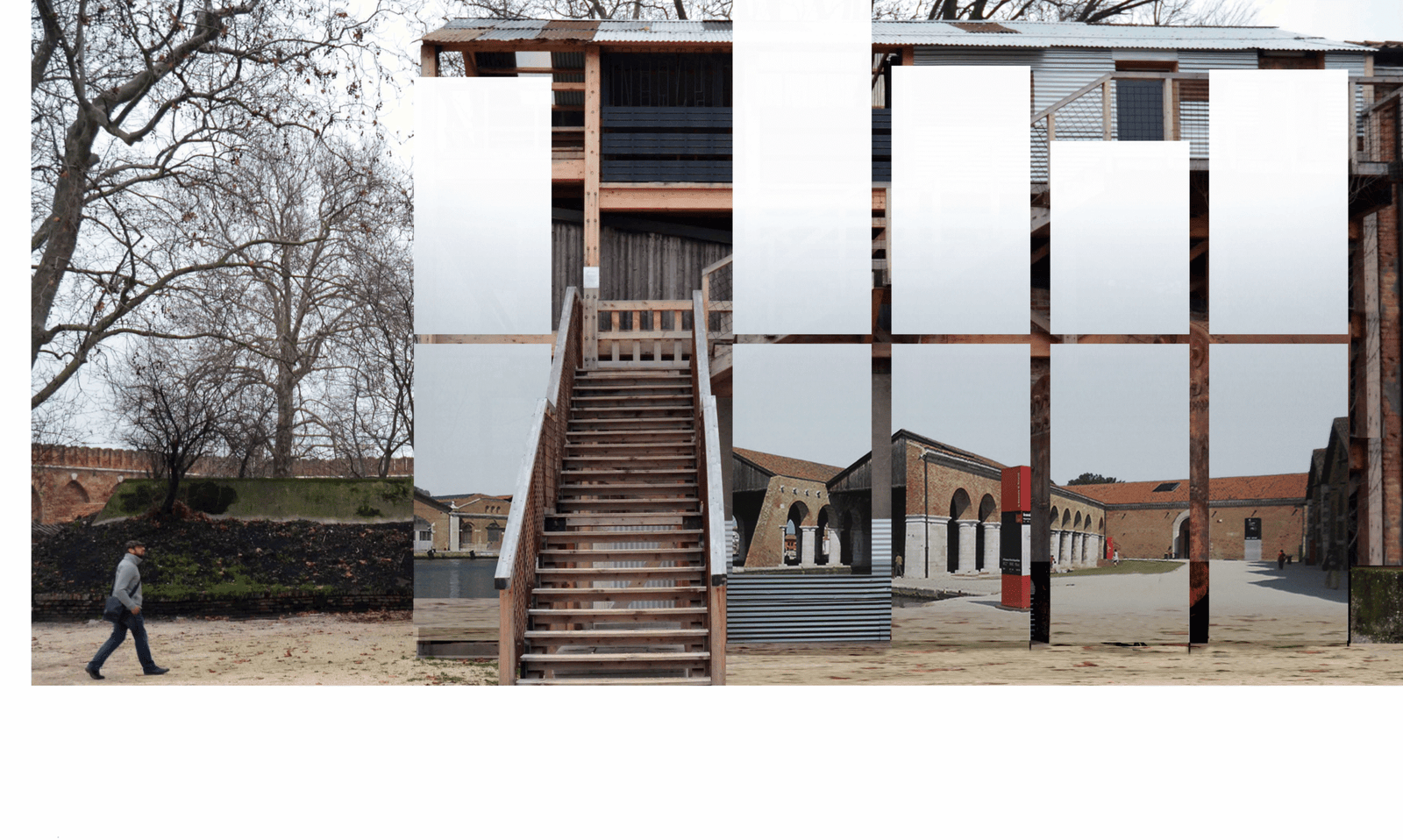
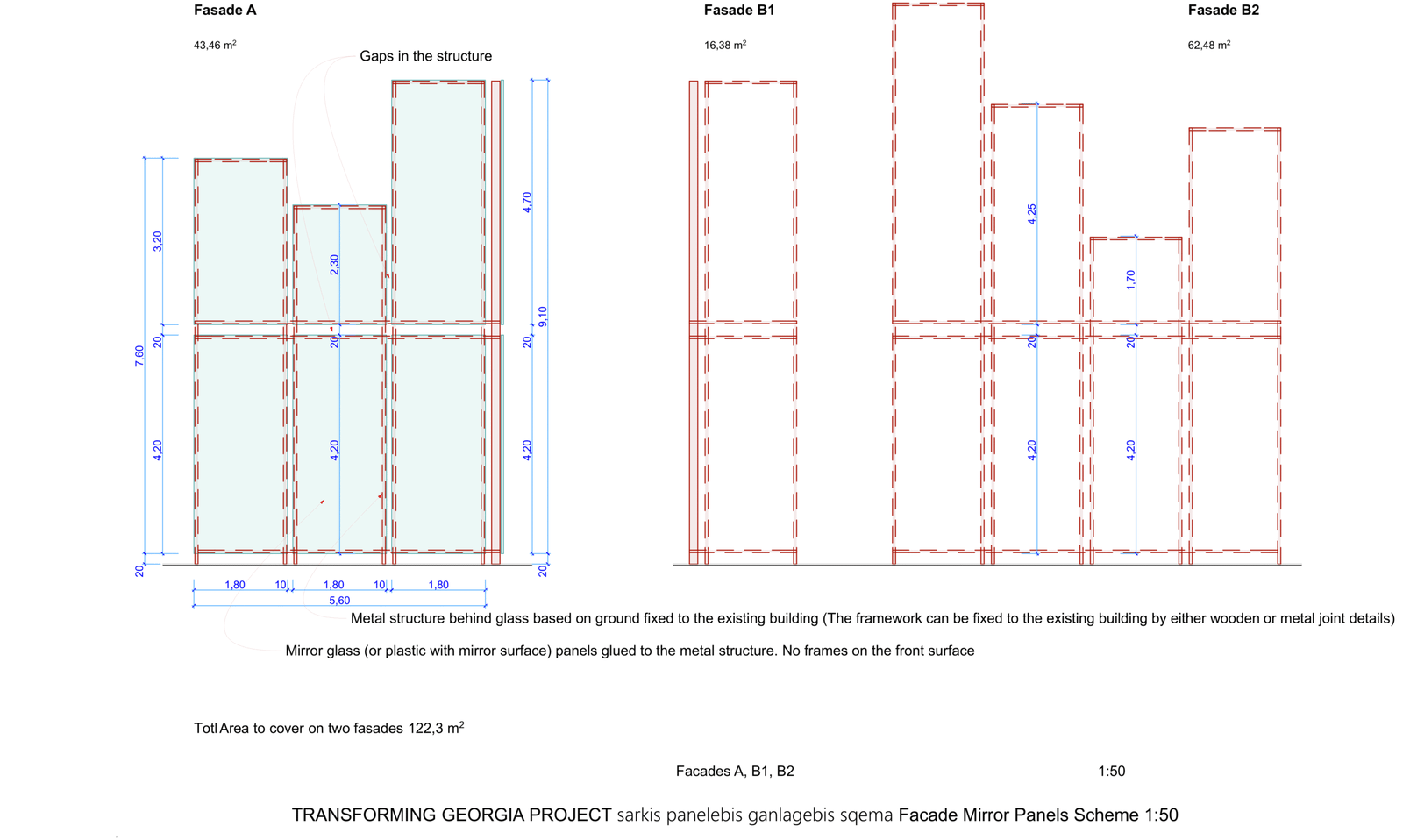
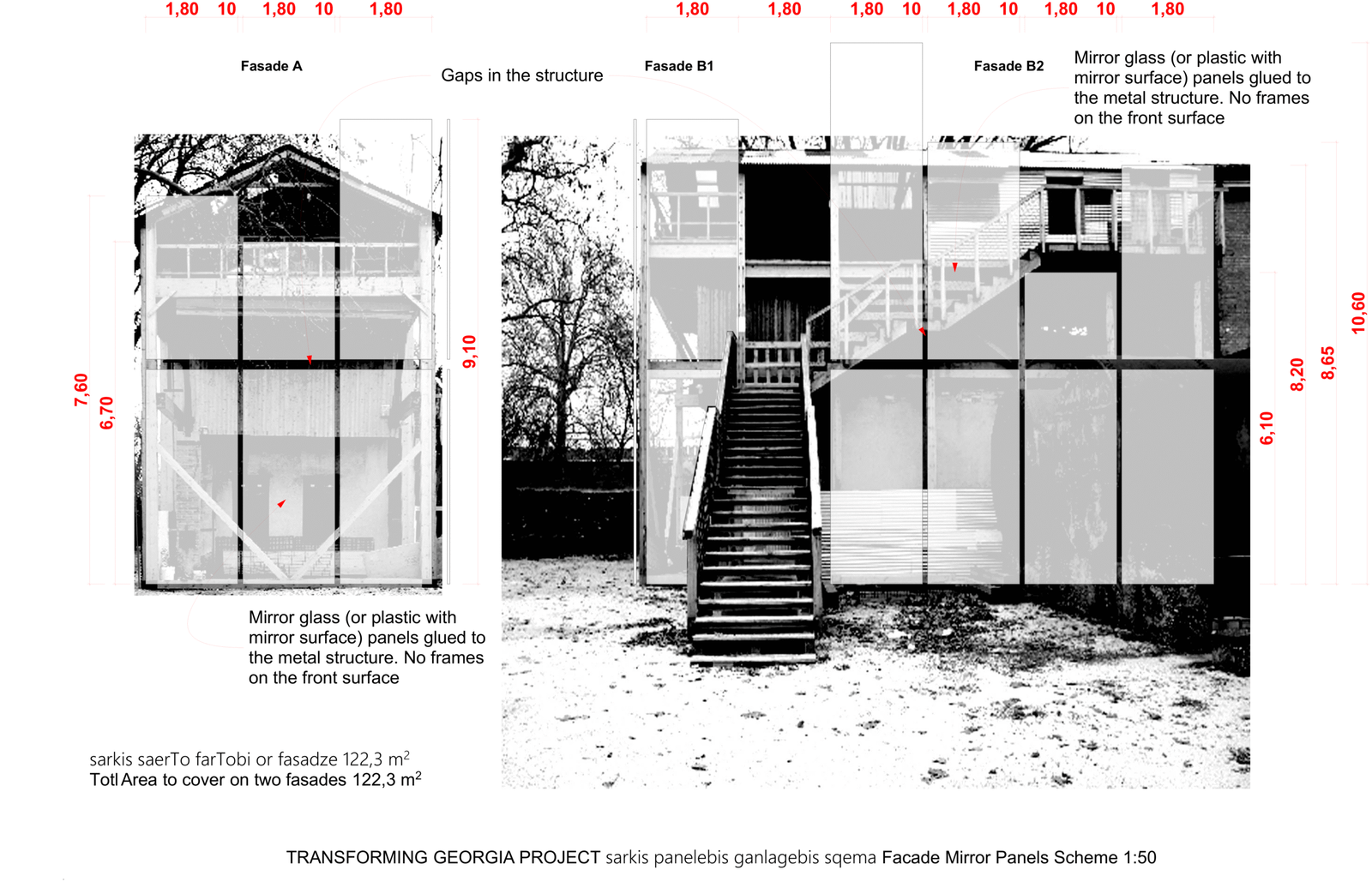
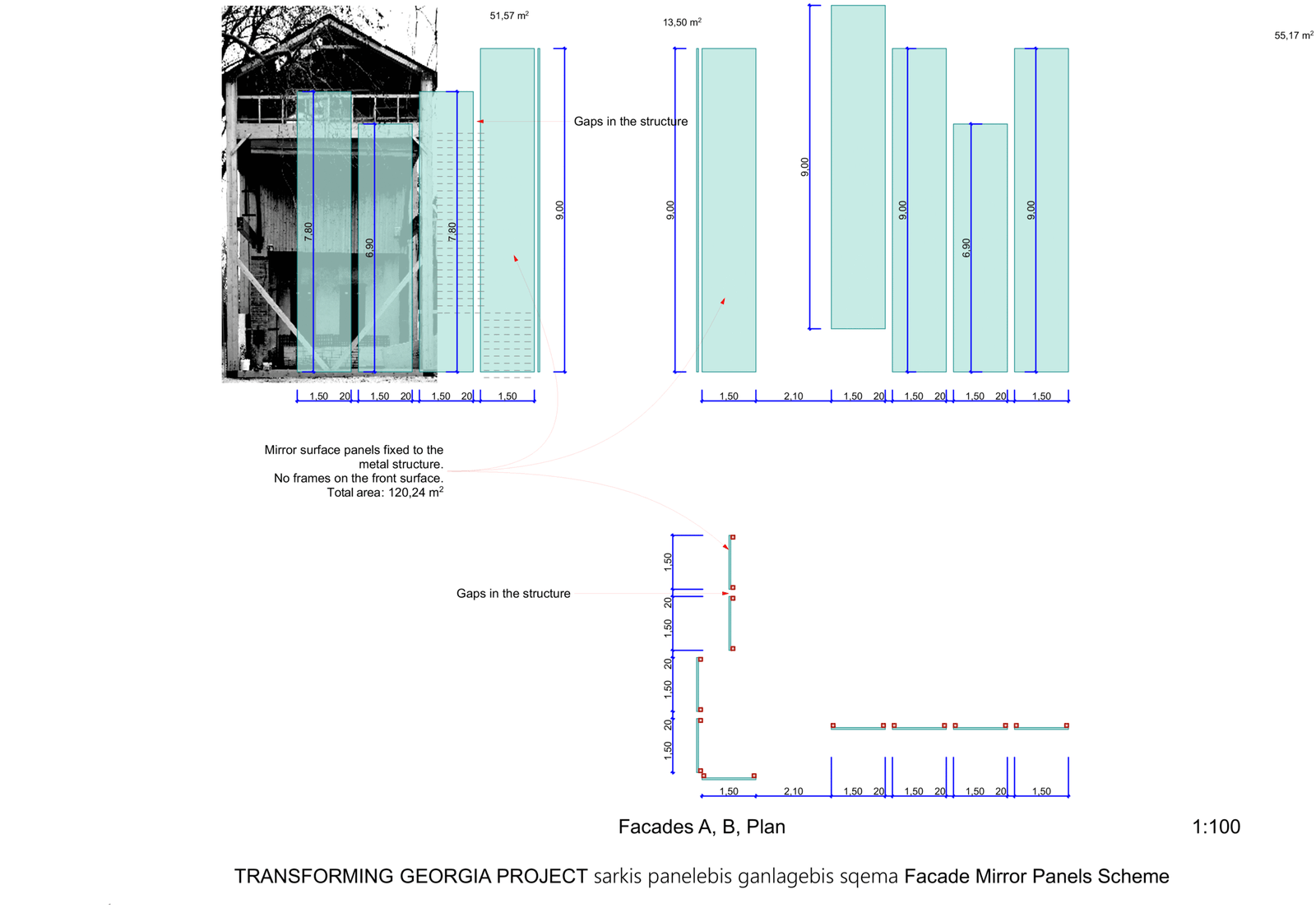
The façade of the loggia is covered on two sides with mirror glass panels. The “transformation” of the loggia, inspired by high-tech architecture, carries a double metaphorical significance: on one hand, it represents the characteristic aspirations of recent years towards conceptual architecture in Georgia, and on the other hand, this structure’s simple, geometric “screen” with a reflective surface can symbolize the country’s willingness to integrate into the current reflexive processes of the modern world and to offer its “perspectives” to the rest of the world. This component is the main theme of the project, and accordingly, the title is derived from it. (Ill. 1)
3. “Foundations.” Levan Mindiaashvili. Fresco
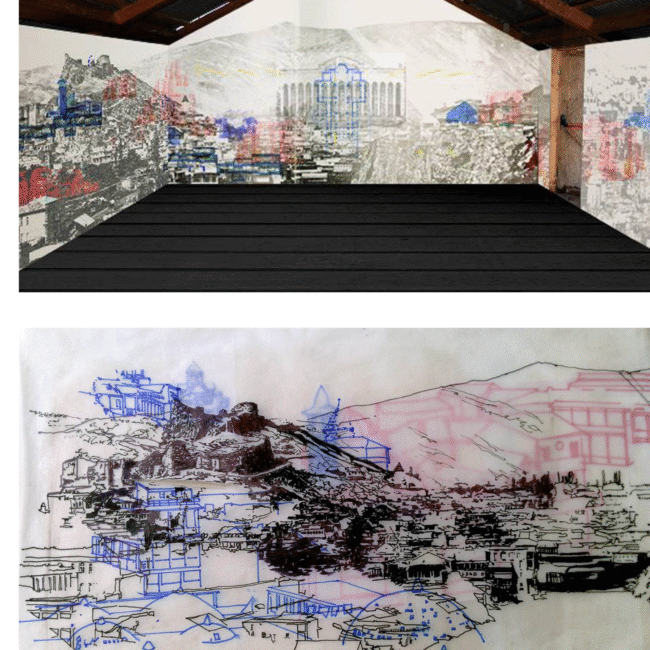
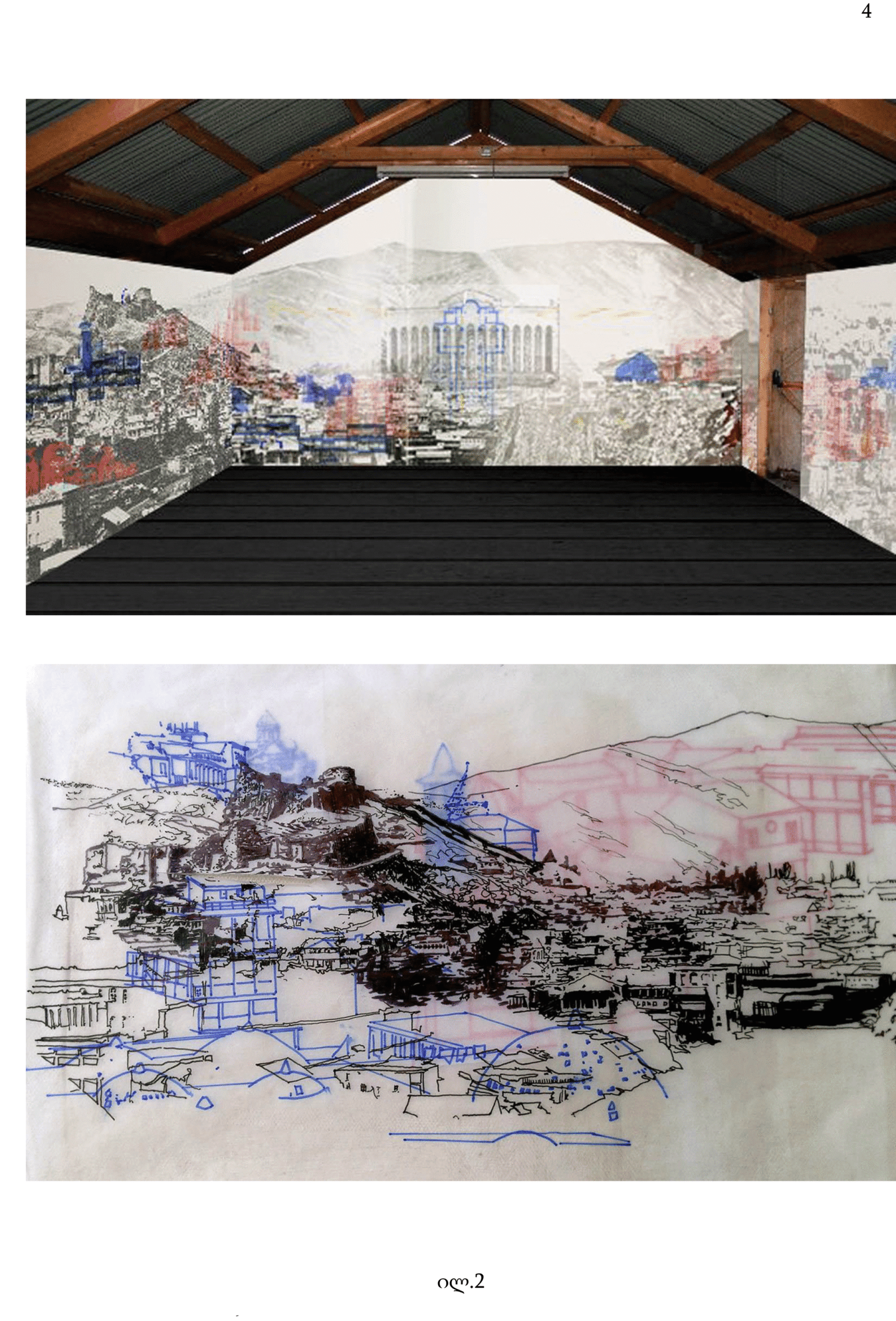
The interior of the “Kamikaze Loggia,” covered with a reflective and conditional barrier, represents the historical-architectural context of Tbilisi – the capital of Georgia, which reflects ambivalent processes occurring over approximately a century, creating a unique version of eclecticism through the intersection of Western, Islamic, imperial, socialist, and other themes and cultures.
The main part of Levan Mindiaashvili’s installation is a fresco (batik, acrylic paint, egg tempera, oil paint primer; 460 x 370 x 370 cm), based on a photo from the 1850s-60s showing the historical part of Tbilisi, which is covered with a non-chronological series of significant moments from urban processes that occurred over the past century. (Ill. 2) Here, there are overlapping layers of buildings that defined the formation of the city. The wall painting will be complemented by three-dimensional representations of buildings made from mirror fabric, which will enhance the volume of the fresco. The dynamics of the narrative will also involve the existing metal “shutters” in the loggia, created by their author, Tea Jorjadze, based on the motifs of woven baskets, while her sculpture-table (wood, metal) will also remain a part of the installation.
Participants:
Khatuna Khabuliani – Art critic, curator. Professor at Ilia State University and the Academy of Arts. She is working on a doctoral dissertation in the field of post-totalitarian art research. A member of the International Organization of Critics AICA, author of numerous publications in local and international publications. Curator and co-curator of many international projects. In 2009, she was the curator of the Georgian pavilion at the 53rd Venice Biennale.
AB5 – Architectural bureau – has been working on private and public projects since 2000. It has received awards in the categories of “Best Residential House” and “Best Project.”
Levan Mindiaashvili – Multimedia artist. Lives and works in New York and Buenos Aires. He is a participant in numerous international exhibitions and a recipient of awards. In 2013, he presented one of the best versions of artistic understanding of recent history in collaboration with colleagues at the Tbilisi State Museum of Arts in the exhibition “Heritage.”